If you have just lost a pet and someone mentioned the Rainbow Bridge, here is what they meant. The Rainbow Bridge is a gentle idea that comes from a short piece of writing. It pictures a green meadow just on the near side of heaven, where pets who have died are young and healthy again, warm and never hungry, running and playing while they wait for the people who loved them. When you one day arrive, the story says, your pet spots you across the grass and races back, and you cross into what lies beyond together, side by side.
It is a picture, not a place. No one is telling you it is literally true. It is simply a way to imagine that your companion is at peace and that the bond you shared did not end at goodbye.
Where did the Rainbow Bridge story come from?
For a long time nobody knew. The writing was passed hand to hand in vet offices, shelters, and pet cemeteries, usually with the words "author unknown" written underneath. In 1994 an advice columnist known as Dear Abby shared part of it with readers, and from there it traveled the world.
The real author was a Scottish artist named Edna Clyne-Rekhy. She wrote it in 1959, when she was 19 years old, in the days after her own dog, Major, died. She typed up copies for grieving friends and never expected it to go any further. Her name was finally confirmed as the author in 2023, more than sixty years after she first put the words down. By then she was in her eighties and had no idea how far her small act of comfort had reached.
That history matters for a simple reason. The Rainbow Bridge was never handed down from on high. It began as one heartbroken young person trying to make sense of losing a beloved dog, which is very likely close to where you are right now.
Is the Rainbow Bridge real?
This is one of the most common questions people quietly ask, often late at night. The honest answer is that the Rainbow Bridge is not a proven place, and it is not part of any single faith. It is an image someone wrote to hold their grief.
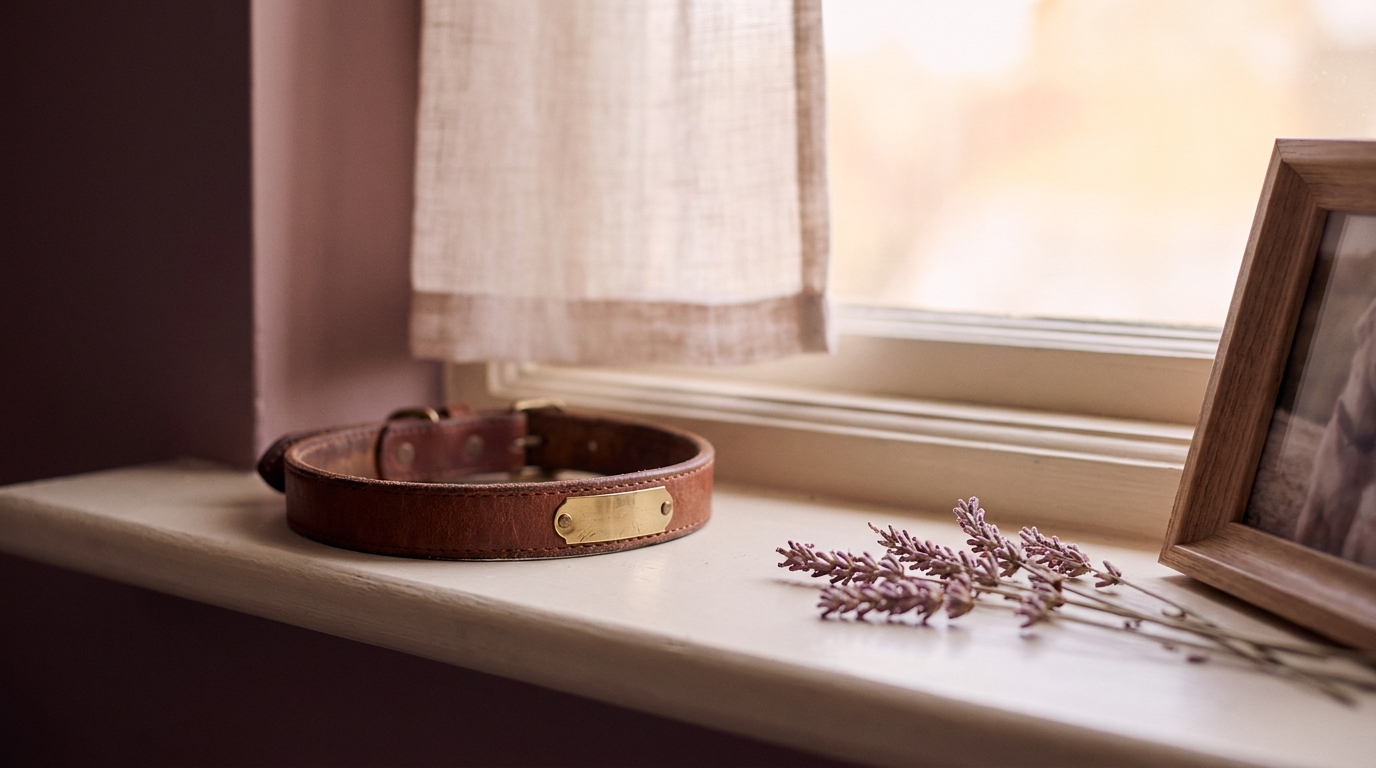
That does not make it worthless. Comfort is real even when it comes from a story. People carry a photo in a wallet, keep a collar on a shelf, or talk to an empty spot on the couch, and none of that is silly. If picturing your pet running free in a sunny field helps you carry the weight of missing them, then the Rainbow Bridge is doing exactly what it was written to do. You are allowed to believe as much or as little of it as you need.
Why does the Rainbow Bridge comfort grieving pet owners?
Grief for a pet can catch people off guard with how heavy it is. The love was uncomplicated, and so the hole it leaves feels enormous. The Rainbow Bridge gives that love somewhere to go.
It answers the two questions that hurt the most. Is my pet suffering now? In the story, no, they are whole and happy again. Will I ever see them again? In the story, yes, they are waiting. Whether or not you take it as fact, having a gentle answer to hold can loosen the tightness in your chest just enough to breathe.
It also gives you words. When a friend says "I'm so sorry, I heard they crossed the Rainbow Bridge," you both understand each other without a long explanation. Grief can be lonely, and shared language helps.
How do you explain the Rainbow Bridge to a child?
Children often take the idea more easily than adults do, because it is already told in the shape of a picture. Keep your words plain and true. You might say that their pet is not sick or hurting anymore, and that they are somewhere warm and safe, playing and waiting.
Let your child lead with their questions, and answer the ones they ask rather than the ones you brace for. It is fine to say "I don't know" about the big mysteries. What a child usually needs most is permission to be sad, and the sight of you being sad alongside them, so they learn that missing someone is just love with nowhere to land.
How can you honor a pet who has crossed the Rainbow Bridge?
You do not have to do anything at all until you feel ready, and there is no schedule for grief. When the time feels right, small acts of remembering can help the ache settle into something softer.
Some people plant a tree or a patch of flowers. Some frame a favorite photo, keep the tag on a keychain, or write down the funny things they never want to forget. Others mark the day their pet died each year with a quiet walk in a place they both loved. Many families like having something they can hold, a keepsake that keeps a shape in the world, whether that is a paw impression pressed in clay or a small memorial for a shelf. If you would like a few gentle ideas, here are some quiet ways to preserve a pet's memory, from paw impressions to a memory box. Some owners also take quiet comfort in the small signs they feel their pet still sends, or in a few gentle words that put the love into language. If a lasting keepsake would help you feel your companion is still close, that can be a gentle next step whenever you are ready. There is no wrong way to remember a life that mattered to you.
Take your time. The meadow, if you choose to picture it, is not going anywhere, and neither is the love that made you look for it.