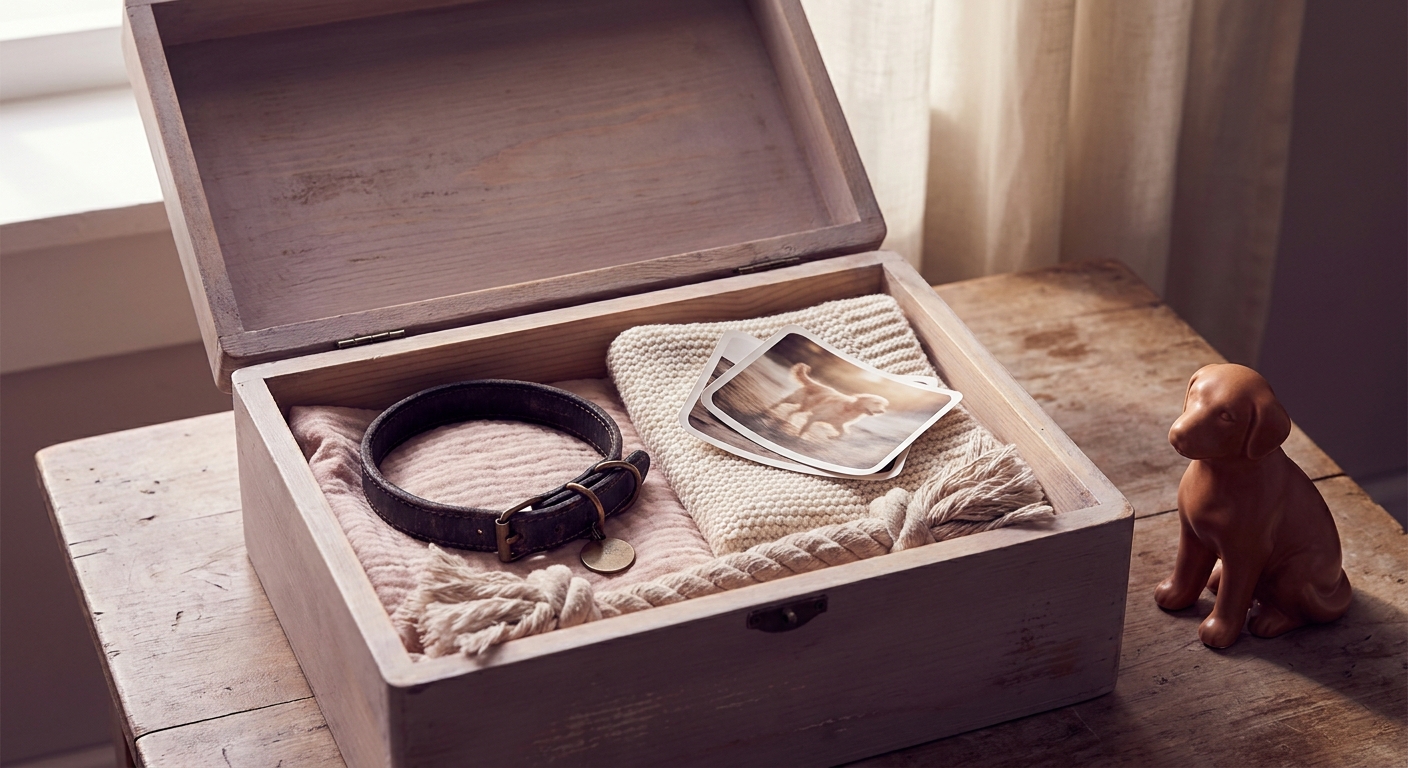
A pet memory box is any container, a wooden chest, an old shoebox, a decorative tin, that holds the small, specific things that were only your pet's. There's no official list of what belongs inside and no particular box you're required to buy. Most people start with a collar, a few photos, and a favorite toy, then add to it slowly over time. It's different from an urn, which holds ashes, and you don't need one to make a memory box that feels full and right.
What actually goes in a pet memory box?
Nothing is required, but a few kinds of things tend to mean the most. It helps to think of them in three loose groups rather than one long list.
Things you can touch: their collar and tag, a favorite toy, a worn leash, a scrap of the blanket or bed they slept on. These are the items that still carry their shape and smell, at least for a while, and many people say these are the hardest to look at and the hardest to let go of.
Things you can look at or read: photos, a sympathy card someone sent, a note you write to yourself about a memory you don't want to lose, maybe a vet record or the little plastic ID tag from their first visit. These hold the story of them, not just the feeling.
One thing made to last: a paw impression, a bit of fur kept in a small vial, or a keepsake made to look like them. Toys fade and fabric wears thin, but a few things can be made to stay exactly as they are.
You don't need an example from every group. One collar and one photo is a complete memory box if that's what feels right.
Is a pet memory box the same thing as a pet urn?
No, and it's an easy mix-up, since a few online shops sell wooden boxes labeled for ashes right alongside the idea of a "memory box." An urn is built to hold cremated remains. A memory box holds mementos, the collar, the photo, the toy, none of which are ashes.
You can have either one on its own, both together, or neither. Some people set a small urn beside the memory box, or even inside a larger one, so everything lives in one place. Others choose only a memory box and handle their pet's ashes separately, through burial, scattering, or keeping them elsewhere. Neither choice is more complete than the other.
What if I don't have very many of my pet's things?
That's common, especially with an older pet whose toys and collars wore out and were replaced years ago, or if things happened quickly and there wasn't time to set anything aside. A memory box doesn't need to be full to count.
A single photo is enough to start. So is one toy, a tag off an old collar, or a note you write about one specific memory, the way they waited by the door, the sound they made when you came home. If you have almost nothing physical left, consider making one thing now: a written memory, a paw impression if your vet or aftercare provider can still take one, or a small keepsake made from whichever photo you do have. A memory box can be one object deep and still mean everything.
How do you keep what's inside from fading?
Ordinary care is usually enough. The Library of Congress, which stores historic photographs for a living, recommends keeping paper and photos somewhere cool, dry, and out of direct light, and using plain, acid-free paper or boxes rather than anything treated with dyes or heavy coatings that can yellow or stain over time.
In practice, that means: keep the box out of a hot attic or a damp basement, don't leave it in direct sun on a windowsill, and if you're storing loose photos, a plain acid-free envelope or sleeve costs little and protects them for years. Fabric items like a collar or blanket piece do fine folded loosely rather than crushed tightly, which helps them keep their shape.
Is it strange to put a figurine or keepsake in the box?
Not at all. Many people want one thing in the box that was made, not just kept, something that shows their pet's actual face or shape rather than only an object that belonged to them.
A small figurine shaped from a photo is a common choice for this. You pick a clear photo, see a preview of how it will look before anything is made, and the finished piece sits in or beside the box as the one thing that was made especially for them. At ForeverPet, these start at $24.99 for a mini size, with free shipping and the single-color version usually arriving within about three days. There's no rush to add this or anything else. The box is just as complete with a collar and a photo.
Can a child help put the box together?
Often, yes, and it can genuinely help. Choosing a toy to keep, picking a favorite photo, or drawing a picture to add gives a child something concrete to do with feelings that otherwise have nowhere to go.
Let them choose, even if their choice surprises you. A chewed-up tennis ball might matter more to a child than any photo. Keep the explanation simple and honest: the box is a place to keep the things that remind us of them, and we can look at it whenever we miss them. There's no right pace for a child either, some will want to build it all in one afternoon, others will add to it for months.
A gentle next step
A pet memory box doesn't need a plan or a deadline. Start with whatever you already have in your hands, a collar, a photo, one toy, and let the rest come later if it comes at all.
If you'd like to read about other ways to hold onto a pet's memory, our guide to preserving pet memories covers paw impressions, keepsake jewelry, and photo books. If you're choosing something for yourself or for a grieving friend, pet memorial gifts walks through the options gently. And if ashes are part of what you're deciding, what to do with pet ashes can help you think it through at your own pace. Whatever ends up in the box, it will be enough, because it's a box about them, and nothing about loving them was ever about quantity.