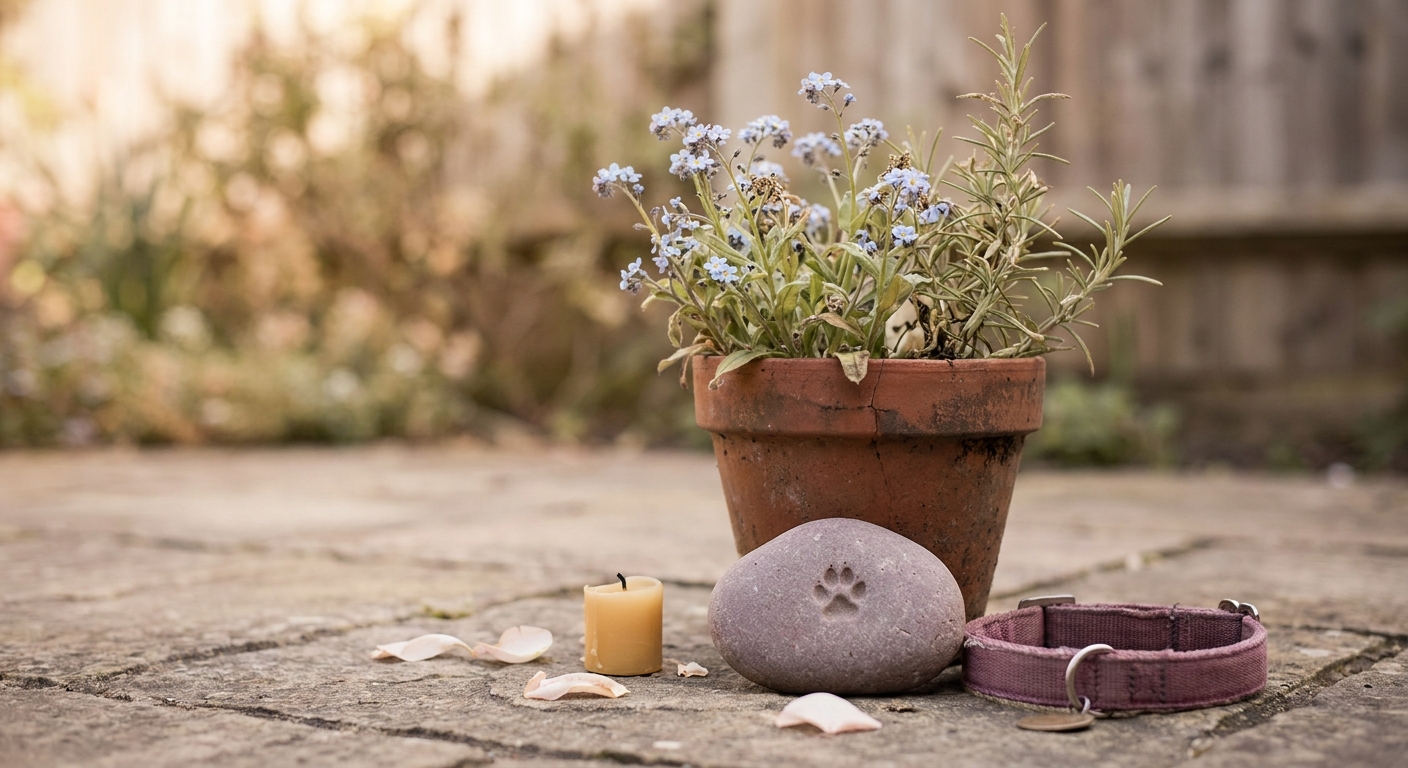
There is something steadying about having a place to go. When a pet dies, grief can feel like it has nowhere to land, and a small living garden gives it somewhere to rest. A pet memorial garden is simply a spot you tend in their memory, and it can be a whole flower bed or one pot on a windowsill. The gentlest way to begin is with a single thing you can care for, then add to it slowly, only as you feel able.
Below are ideas grouped by what you might need, whether you have a backyard or a balcony rail, and whether you want to include your pet's ashes or keep them somewhere else entirely.
How do you start a pet memorial garden when you have no energy?
Start small enough that it feels like relief, not another task. In the early weeks of grief, a long list of projects is the opposite of comforting, so pick one thing and let that be the whole garden for now.
That one thing might be a single plant in a pot by the door, a packet of your pet's favorite patch of wildflower seed, or a flat stone with their name set where they used to sunbathe. You are not building a monument. You are making one small place that says they were here and they were loved. A garden that starts as a lone marigold in a terracotta pot is still a memorial garden, and it can grow the way your grief eases, a little at a time.
If even that feels like too much on a hard day, it is fine to wait. The spot will still be there when you have the energy, and choosing to rest is not falling behind.
Can you plant a garden in your pet's ashes?
Not straight into them, and this is the part most guides skip. It feels natural to want your pet's ashes to become a tree or a bed of flowers, but cremated ashes are hard on plants. They are strongly alkaline, with a pH of roughly 10 to 12, while most plants want soil closer to neutral, and they carry far more sodium than roots can handle. That combination blocks a plant from taking up the nutrients it needs, so seedlings planted directly in ashes usually struggle or die.
The good news is that you can still grow something living from them, you just prepare the ashes first. One option is a soil amendment made specifically for cremated remains, which lowers the pH and dilutes the salt; you mix it with the ashes and let it rest for about 90 to 120 days before planting. Another is a biodegradable urn kit, where the ashes sit in a chamber with a neutralizing additive and a seed or sapling grows in clean soil above them. Ordinary garden soil on its own will not fix the problem, so it is worth using something designed for it.
If including the ashes feels like a lot to think through right now, you do not have to decide today. Our guide to what to do with a pet's ashes walks through the choices gently, and a memorial garden works just as well with no ashes in it at all.
What plants are safe for a pet memorial garden?
Safety matters most if another animal still visits the space, whether that is a surviving pet, a neighbor's dog, or the wildlife that wanders through. Some of the prettiest garden plants are genuinely dangerous, so it is worth knowing the main ones before you plant.
True lilies are the most important to avoid if you have a cat, because every part of the plant is deadly to them, including the pollen and even the water in the vase, and a small exposure can cause kidney failure. Sago palm is the one to watch with dogs; it contains a toxin called cycasin, and a small amount, especially the seed, can cause liver failure and death. Azaleas and rhododendrons, and the bulbs of tulips and daffodils, are also toxic to both cats and dogs. When in doubt, check the plant against the ASPCA's toxic plant list, which is free to search.
Plenty of gentle, safe plants carry meaning of their own. Forget-me-nots are the traditional flower of remembrance. Rosemary has stood for remembrance for centuries and smells wonderful when you brush past it, lavender is calming and stands for devotion, and marigolds bring warmth and easy color. Many people skip the symbolism entirely and plant whatever their pet loved to lie in or sniff, which is its own kind of right.
What else can you put in a pet memorial garden?
Plants are only part of it. A memorial garden becomes a place you return to when it holds something to look at, something to touch, and somewhere to sit for a minute.
For a marker, a flat engraved stone or a piece of slate with your pet's name lasts outdoors for years. You can also make a stepping stone yourself by pressing the shape of their paw into wet concrete, which many people find is a quiet, hands-on way to grieve. A small plaque, a wooden cross, or a weatherproof photo tile can mark the spot too.
For gentleness, a wind chime gives the space a soft sound on the breeze, a solar light lets it glow after dark without any wiring, and a small bench or even an upturned log gives you a place to sit with them. One sensory thing is usually enough; a memorial garden does not need to be crowded to feel full.
If you would like the spot to hold their actual likeness, a keepsake shaped like your pet can become its quiet center. A weatherproof resin or stone figure can stay outdoors, while a small figurine made from a favorite photo is better kept just inside a nearby window, where it looks out over the garden and stays safe from the weather. You can find more ideas in our roundup of pet memorial gifts and keepsakes.
How do you make a memorial garden with no yard?
You do not need land, or even a balcony. Some of the most tender memorial gardens are a single pot on a kitchen windowsill.
If you rent or live in an apartment, choose one container you like and one pet-safe plant, then tuck in a small marker, a photo, or their collar looped once around the rim. A dish garden of low succulents, a pot of the herbs they used to nose through, or a single flowering plant all work. A window box or a couple of balcony pots can hold more if you want, and the whole thing can move with you if you leave, so you never have to leave the memorial behind.
The point was never the size of the garden. It is having one small living place that is theirs.
How do you care for a memorial garden over time?
Choose things that mostly look after themselves, so the garden stays a comfort rather than a chore. Perennials, the plants that come back on their own each year, are kinder to a grieving person than annuals you must replant, and a layer of mulch keeps weeds down and holds water so you water less.
Many people find the garden becomes part of how they mark time. Tending it on your pet's birthday, on the anniversary of their loss, or just on a slow Sunday can become a small ritual that lets you visit the feeling on purpose instead of being ambushed by it. In colder places, a hardy evergreen, a marker, or a solar light keeps the spot present through winter when the flowers are gone.
Over the seasons the garden tends to grow the way grief does, softening and settling and coming back to life in its own time. You are not maintaining a monument so much as keeping a small living thing company, which is a lot like what your pet did for you.
A gentle next step
A memorial garden does not have to be finished, or even started, today. One plant, one stone, or one pot on a windowsill is a complete beginning, and you can let it grow whenever you have the heart for it.
When you want to think about other ways to keep your companion close, you might read our gentle guide to preserving a pet's memory, or, if you are still deciding, what to do with a pet's ashes. However you choose to remember them, tending something living in their name is a quiet way of saying the love did not stop. It just found somewhere new to grow.