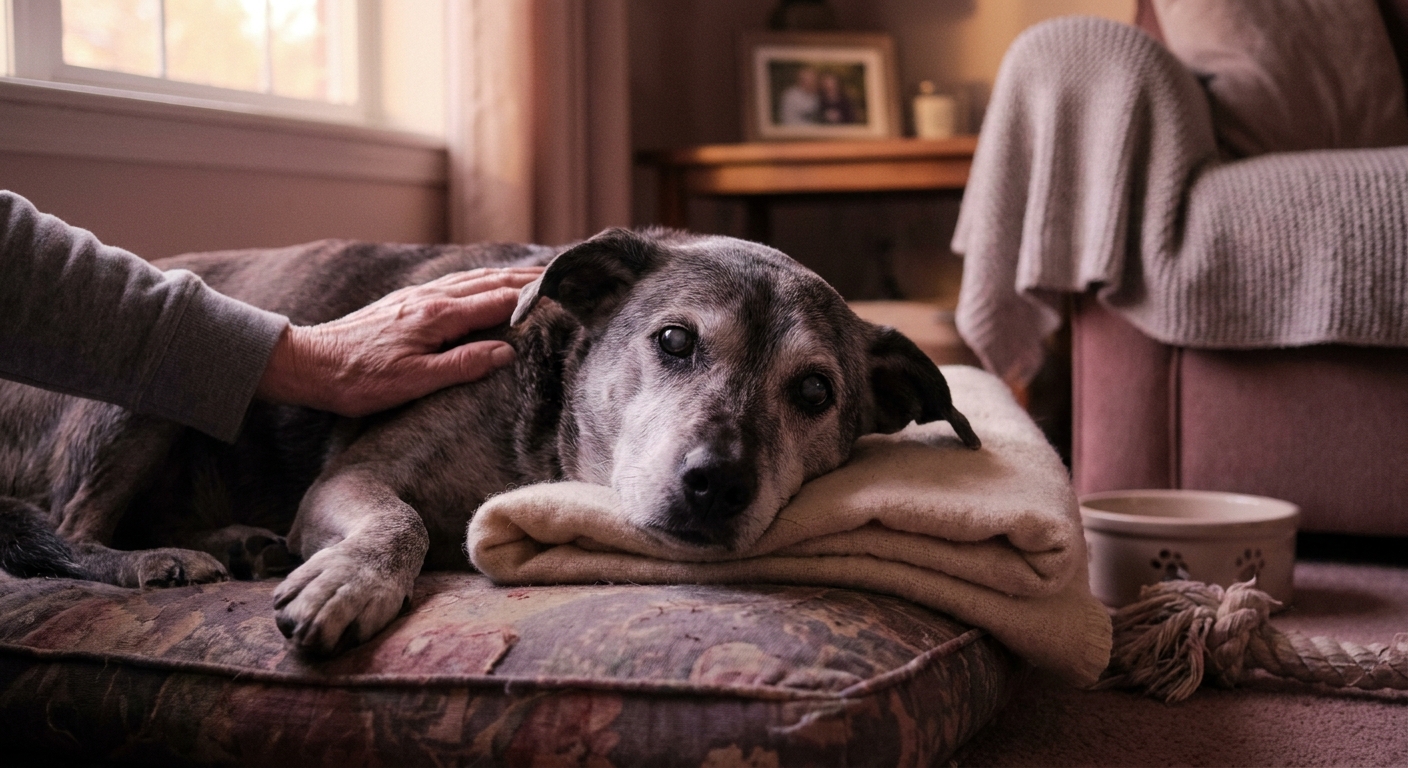
If your pet has been given a hard diagnosis, or you are watching them grow old and slow, you may already be grieving them while they are still curled up beside you. That feeling has a name. It is called anticipatory grief, and it is the mourning that begins before the goodbye. It is normal, it is common, and it is not a sign that you are giving up on your pet or loving them any less.
Most writing about pet loss starts the day after. This is about the harder, quieter stretch before, when your companion is still here and your heart is already aching. Below is what anticipatory grief is, why it hurts the way it does, and some gentle, concrete things that help, including how to use this fragile time to gather memories while you still can.
What is anticipatory grief in pets?
Anticipatory grief is the sorrow you feel ahead of a loss you can see coming. With a pet, it usually starts with a moment: a diagnosis at the vet, a body that no longer jumps onto the bed, a series of small declines that add up. Somewhere in there, your mind quietly understands that the time left is short, and grief arrives early to meet it.
It can look like ordinary grief in almost every way. People describe sadness, dread, a tight chest, trouble sleeping, and a strange background hum of loss even on the calm days. You might find yourself crying over a pet who is right there wagging at you, which can feel confusing until you realize what your heart is doing. It is trying to get ready.
Is it normal to grieve a pet who is still alive?
Yes. Grieving before a loss is a well-recognized response, and it does not mean anything is wrong with you. It usually means the opposite: that the bond is real and deep, and that you understand what you are about to lose.
There is a particular loneliness to this kind of grief, because the world does not always make room for it. Friends may say "but they're still here," as if that settles it. People send flowers after a death, not before one. So the anticipatory griever often carries the weight quietly, unsure they are even allowed to feel it. You are allowed. Mourning the future does not steal from the present. For many people, naming the grief is what finally lets them set some of it down.
Why does anticipatory grief feel like a rollercoaster?
Because hope and grief take turns. A good morning, a decent meal, a tail thump, and you let yourself believe there is more time. Then a bad night arrives and the fear rushes back in. That swing between hope and dread is exhausting, and it is one of the hardest parts of loving a pet through a long decline.
It helps to expect the swing instead of being ambushed by it. A good day is not a false promise, and a bad day is not the end arriving. They are just the shape this takes. When a lovely afternoon suddenly makes you cry, that is not you ruining a nice moment. That is grief and love using the same door.
How do you cope with anticipatory grief for a pet?
There is no way to make it not hurt, because the hurt is love. But there are things that soften it and help you stay steady enough to be there for your pet.
Let yourself feel it without arguing. The grief is not a problem to fix; it is a response to honor. Trying to suppress it usually just makes it leak out sideways as irritability or numbness.
Stay close to your routines. The morning walk, the evening feeding, the same warm spot on the couch. Familiar rhythms give both of you something solid to stand on when everything feels uncertain.
Give yourself permission to have grief days, the kind where you cancel what you can and simply rest. You are doing hard emotional work on top of ordinary life, and you do not have to be productive through it.
Lean on people who understand. Not everyone will, and that is worth knowing in advance. Seek out the ones who do, whether that is one steady friend, a pet loss support group, or an online community of people carrying the same weight.
What do you do on a good day that breaks your heart?
Take it. A good day is a gift, not a trap. When your pet perks up and you feel that flash of joy chased instantly by fear, try to let the joy have its full moment before the fear moves in.
These are the days to do the small, ordinary things you both love. A slow sniff-filled walk, a shared piece of their favorite food, an afternoon of sun on the floor. You do not need a grand bucket list unless that helps you. Often what people treasure later is not the big outing but the plain, quiet togetherness of a normal good day, fully noticed.
How can you make memories while your pet is still here?
This is the part most guides skip, and it is one of the kindest things you can do for your future self. While your pet is still with you, you can gently gather the pieces of them that you will want to hold later.
Take more photos and videos than feel necessary, especially of the small things: the way they sleep, the sound of their tags, how they greet you at the door. Press a paw print into soft clay, or trace the shape of a paw on paper. Keep a favorite toy or the collar they wear now. Write down the funny, specific things you never want to forget, the private language the two of you share.
None of this is morbid, and doing it does not mean you have given up. It means you are choosing to keep, on purpose, what you already love. Some people find comfort in turning one of those photos into a lasting keepsake they can hold, so their companion still has a shape in the world after they are gone. There is no rush and no right way. Gather what feels tender to you, at whatever pace you can manage, and let the rest go.
How do you tell if your pet still has good quality of life?
When grief arrives early, it can be hard to judge how your pet is actually doing through the fog of your own fear. A simple, steady checklist can help you see more clearly.
Many veterinarians use a quality-of-life scale created by Dr. Alice Villalobos. It scores seven things, each from 1 to 10: hurt, hunger, hydration, hygiene, happiness, mobility, and whether there are more good days than bad. A total above 35 out of 70 generally suggests your pet's life still holds more comfort than suffering. It is not a stopwatch or a verdict, just a gentle tool to check your read against, and a way to have an honest conversation with your vet, who knows your pet's case best. Bring your worries to them; you do not have to weigh this alone.
What about the guilt of grieving too soon?
Guilt loves this territory. You may feel guilty for crying while your pet is still alive, for feeling relief mixed with sorrow, for being tired of the caregiving, or for even thinking about the end. None of that makes you a bad companion.
Caring for a sick or aging pet is genuinely draining, and feeling worn down by it is not the same as loving them less. Relief and grief can share a room. So can hope and acceptance. The mixed-up, contradictory feelings are not a sign you are doing it wrong. They are a sign you are human, doing one of the harder things a person can do.
Where can you find support?
You do not have to carry this by yourself. Talking to someone who understands pet loss, even before the loss, can ease the weight.
Several veterinary schools run pet loss support helplines staffed by kind, non-judgmental people. The Cummings School of Veterinary Medicine at Tufts University runs one you can reach at 508-839-7966, open from 6 to 9 p.m. Eastern, Monday through Thursday, with voicemail at other times. Your own veterinary clinic can also point you toward local support groups and counselors who work with grieving pet owners.
For now, be as gentle with yourself as you are with your pet. This time is heavy, and you are meeting it with love, which is the only thing anyone can bring. When you feel ready to think about keeping their memory close, gentle ways to preserve a pet's memory are here whenever you need them, not a day before.